
Tandem Marriage: Brad and Tami Miller Draw on Therapy, Pastoral Backgrounds to Lead Marriage Ministry at California-based Megachurch
By Amy Morgan
Brad and Tami Miller have served married couples in various churches for the past 25 years. Brad is an ordained pastor who spent 26 years as a professional firefighter, and Tami worked as a Marriage & Family Therapist for 20 years. They launched non-profit Tandem Marriage in 2015 after running Restoration Counseling Service with more than 20 therapists in Redlands, California, for 15 years.
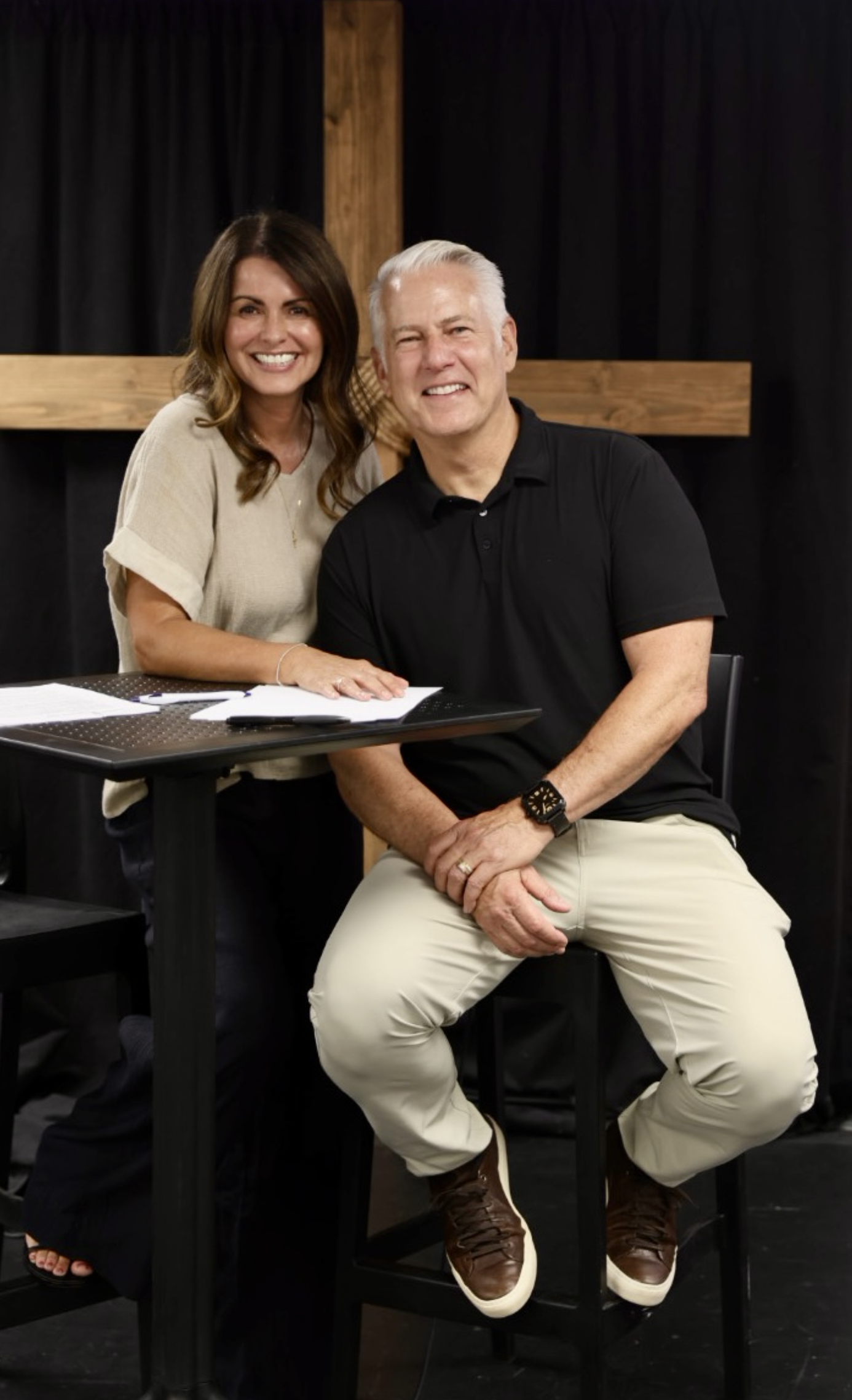
As they stepped back from the full-time counseling practice, Tami and Brad were asked to partner with Sandals Church to lead marriage ministry at the largest (4500 strong) of the megachurch’s 15 campuses. They’ve been busy building and mentoring a team, hosting events, creating a pathway for couples needing help, all while coaching 9-12 individual couples a week.
Through their experience helping churches with hurting couples, they realized churches have been ill-equipped to be on the front line for struggling marriages, because finding solid, qualified, and professional support for people can be difficult and costly.
“No matter whether you are a senior pastor, a staff member, high level volunteer, or just a person in church, everybody needs to have somewhere to go to get help when they realize they are not in a good place. That’s why we have a team. If the leadership team gets stuck, they can contact us, and we are going to help them get through it. We’ll connect church members with marriage mentors or a marriage event. There’s no excuse to sit in a mediocre marriage – there really is every reason to have a God-honoring marriage.”
It's been said that 50% of the effectiveness of a marriage ministry depends on the apparent buy-in of your senior pastor. How have you been able to get the support of your senior pastor for marriage ministry?
Our Senior Pastor, Matt Brown, and Administrative Pastor, Dan Zimbardi, were all in from the beginning, Brad said. They were well aware of the void created in the absence of a healthy marriage ministry. “Within weeks of us selling our group counseling practice, Matt and Dan contacted us and asked to meet,” the Millers said. “At the time, we had no idea what this meeting was about, we simply trusted them enough to say yes to the meeting. At that meeting, we talked together for over an hour about the struggling marriages at the church. At one point, Pastor Matt said, ‘What we really need is 30 Brad & Tami's at this campus.’ I still remember the weight of that statement as I processed what that meant,” Brad said. “To me it referred to needing a well-trained and competent team of marriage heroes in place to serve as the front line for couples needing help as well as a team of marriage advocates to volunteer at marriage events. We left the meeting that day and I turned to Tami and said, ‘I think they just offered us a job!’”
If you have a pastor who needs to be convinced that marriage matters to God, study God's design and purpose for marriage (Gen, 1&2, Matt. 19, John 17, Eph. 5, Hebrews 13, and others). From that understanding, you will be able to articulate to your pastor why God has a favorable view of marriage and why you do too! Brad advised.
Most successful marriage ministries are carried by the passionate support of lay couples. How have you been able to recruit ordinary couples to be on your marriage ministry team?

“Tami and I have always been passionate about understanding God's purpose for marriage,” Brad continued. “Think about it – there are lots of ways God could have chosen to form families and communities, but He chose marriage as the foundation for all of it. Once we had the opportunity to share God's purpose for marriage from the stage, people lined up to get on our team. Any good leader knows that it's difficult to get people to follow an ambiguous goal but getting people to follow a clear and well-articulated goal is pretty straightforward. We have an amazing team!”
While the Millers wish they could mentor everyone, they realize they can’t pour into all 4500 members of their church. They focus on directly supporting their marriage mentors, offering monthly training to enrich their marriages and being available to help if leaders get stuck. They call their marriage mentors “marriage heroes” and remind them they need them on the front lines if they are going to change the culture of the church. “As we pour into the leaders and their marriages thrive, it overflows to the couples they mentor,” Tami said. “A rising tide raises all ships,” Brad added.
Most couples "don't feel qualified" to work in a marriage ministry. How have you been able to overcome that objection?
“From the beginning, we let our marriage mentors know that we will train them, prepare them, and regularly pour into them. We also let them know three key elements of doing marriage ministry with us. First, that they can always come to us with their questions. Second, that Tami and I have worked with all kinds of couples, including those wanting to heal from a major betrayal like infidelity, which means they can trust us and our experience. And third, since Tami and I started our own marriage with a statistical disadvantage (everyone around us divorced), yet are thriving, we remind them, ‘If we can do it, you can do it too!’” Brad said.
Most church leaders are overwhelmed by the sheer number of marriage programs and resources available to churches. How do you select the right marriage programs for your church?
While it is the easiest to start with programs and resources, it will always be the most effective to start with understanding the needs of the people at your church, Brad said. “We knew the married couples at our church were hurting, and that most of them had been silently hurting for years. This was not a situation for programs and resources, it was a situation where we needed each husband and each wife to be seen, heard, and understood by each other. We really needed one-on-ones with each couple, but there are only two of us as leaders and well over a thousand couples.
“Therefore, we knew we needed to start with building a team, which we did. Next, we decided to offer monthly marriage events because we wanted some consistency with marriages, to start building some community and a place to regularly talk about what healthy, God-honoring marriages look like. We knew that having a one-time marriage event would not be able to offer the regular engagement or encouragement we were looking for, so monthly events offered a consistency that made sense. So far, none of this had been driven by programs or resources, it was driven by the needs of the couples at our church. While there are many great resources and programs out there, we weren't distracted by them in the beginning, which allowed us to build what our church needed.

“In our case, we already had some great resources that we had been building into our own website (https://TandemMarriage.com) for years. We had been writing blog articles about marriage, we had a list of marriage books that we had read and felt confident recommending, we had some tools that we'd developed for our work with couples, and more. We had been developing this for use with the couples we worked with, and in a grand tribute to the way God does things, He had it all lined up for something we hadn't really planned for… marriage ministry,” Brad said. “If you are reading this and think, ‘Well, I don't have all of those resources already vetted,’ there might be something you are missing. You already have a list of marriage books you love. You already have a list of organizations whose marriage articles and resources are regularly read and trusted by you. You likely already know a pastor or marriage ministry lead who would love to be the wind beneath your wings as they share with you what they know. In other words, start where you are with the things you already have and know. Don't get overwhelmed with resources and programs in the beginning. And, by the way, feel free to use anything on our website as well—these resources are not just for us, they are for The Kingdom and for God's glory!”
Most church-based marriage ministries provide an adequate level of care for most marriages. For those marriages whose needs are beyond that normal level of care, how have you partnered with the professional counseling community to provide that deeper level of care?
Brad identified three general categories of couples at churches:
Those who are in a good season and would like some enrichment to stay there.
Those who have been drifting for a few years and could use some course corrections.
Those with big challenges like infidelity or porn addictions that need professional help.
“If we were going to help the couples in the third group, we needed a team of professionals to help us do so,” Brad advised. “This is why our church invited hundreds of mental health professionals to be interviewed and vetted for our local counseling referral list. Today, our marriage mentors are equipped to know when a couple needs help that is beyond their scope. In these cases, they will share our counseling referral list and encourage a couple to take that step.”
Tami and Brad also have contracted with their church to provide coaching services to parishioners and staff – an arrangement they’ve had in place for at least a dozen years through their group counseling practice. While the church pays for people to receive services, the layer of separation allows for privacy – and especially for pastoral staff who might not feel comfortable sharing struggles.
With Brad’s pastoral background, he knows firsthand the difficulties. “When you are the pastor or pastor's spouse, everybody thinks you have all the answers,” he said. “Pastoral couples are really lonely – they think there’s nobody else to talk with.
Marriage events are a normal part of a marriage ministry, but they also require looking after a thousand details. How have you been able to provide marriage events for your community without overwhelming your staff and leader couples?
“This is where our monthly rhythm has been helpful,” Brad said. The marriage ministry at Sandals Church started meeting monthly and built momentum, then evolved over time based on what people at their campuses needed.
“Many of the details for our monthly events are repeatable and predictable. We even have an ‘over the top’ version of our monthly marriage gatherings, complete with date night giveaways and a photo booth, as well as a simpler version depending on the season (summers are typically lower in attendance) and how many couples from our marriage team are able to help.

“It is also our hope that anything we have learned or done could be duplicated at another church and easily modified for their unique needs. For example, three other Sandals Church campuses have been asking about what we are doing. We tell them to come and see so they can figure out what makes sense for their campus and the marriages there. When it comes to launching (or relaunching) a marriage ministry, we love the idea of getting the married couples from that church to submit the marriage questions they have always wanted to ask. This becomes a great way to know where these couples are currently and what kind of help and support they need from your marriage ministry. For us, these questions also become great content for a marriage Q&A event and inform us as to what we need to be teaching in the coming months or year.”
And the process remains fluid. Brad and Tami are still developing programs for their church. What’s working now is a Marriage First community building event held the first Saturday of every month that draws a large group of couples. They’ve planned these events to coincide with the church’s 5:45 p.m. evening service. The fast-paced evening includes a speaker and discussion time. Sometimes a light snack might be served. Since Sandals Church also offers an earlier 4 p.m. service, couples can attend church, then go directly to Marriage First. An added bonus for parents, they can keep their children checked in to the kids’ program for both the service and the Marriage First event. The Millers noted the importance of childcare to give couples with kids a break to focus on themselves. Sandals Church uses a Livescan dynamic background check that constantly updates information, so parents can trust the people with whom they leave their children.
On the even months, more intimate groups are formed so those in these groups can benefit from their discussions together and continue to meet to unpack a marriage theme with more time for community.
Marriage First has been attracting people in all ages and stages – from brand new marrieds to couples in their 60s. “There’s a big variety,” Tami said, “and they all feel comfortable.” This arrangement will hopefully provide opportunities for what Brad termed a “mentor sandwich.”
90% of churches don't give financial support to marriage ministry. How have you been able to get a "line-item" in the church budget?
“This should be a non-negotiable for any healthy church,” Brad said. “Children's ministry is a given, right? Does it make any sense to teach our children the love of Jesus, then send them home where the love of Jesus is rarely, if ever, demonstrated? NO! More than anything, this confuses our children, and they grow up with a very skewed view of the love of Jesus. These kids grow up essentially thinking, ‘If what I saw in my parents at home is what the love of Jesus looks like (they went to church every weekend, after all), then that is not what I want for my life.’
“If we are going to teach our children about the love of Jesus and we want them to stay centered on Jesus as they mature into adults, then they need some consistency between what they are told at church and what they see at home. This is what each marriage champion needs to make their own and present to their pastor and elder board.”
What have you done to create a year-round plan for marriage ministry? How have you been able to get priority for your work on the church calendar?
“Once our church leadership understood the disconnect in teaching children about Jesus while neglecting spiritual growth in their parents’ marriages, they began to make accommodations for marriage ministry. This took some patience from us as we built intentional relationships with other ministry leads at the church,” Brad said. “It was important for everyone on our church leadership team to understand that marriage ministry was not a threat to their programs and scheduled events. On the contrary, marriage ministry becomes the glue that holds so much of what we do in the church together.”
Obviously, you are passionate about marriage. Why is serving marriage important and how have you seen the Gospel advanced in your work serving marriages?

“Yes, we are passionate about marriage, and we believe that EVERY church needs a marriage champion or two! As believers, it is important for us to have a clear understanding of The Gospel, but we also need to see The Gospel lived out daily. And, whether or not we see The Gospel lived out daily most likely ties back to an important married couple in our lives. We cannot teach The Gospel yet not live it out in our marriages. Yet, this is what far too many Christians do,” Brad said.
“When we are able to help a husband see his wife closer to the way Jesus sees his wife, The Gospel is doing its job to change lives. When we are able to help a wife see her husband closer to the way Jesus sees her husband, The Gospel is doing its job to change lives. When we can help parents display the love of Christ more fully in their marriage, their children get to see The Gospel lived out. We need to think highly of marriage and learn to live it out. In John 17:20-23, Jesus ends with, ‘[because of the unity of believers] the world will know that you [God] sent me and have loved them.’ The world will see Jesus in us and know that God is real. This is the power of a God-honoring marriage. The truth is, Jesus thought pretty highly of marriage, and it seems that we need to do the same.
“Jim Burns once said, ‘If you reach the marriage, you will reach the family. And if you reach the family, you will reach the world.’ We agree!”
Brad and Tami also empathize with couples who struggle due to a lack of healthy marriage role models. Brad described the two of them as “pound puppies from broken homes.” Tami noted they can count 13 divorces among their immediate family. They are the only couple who has stayed married. Despite starting their marriage on a strong foundation of friendship, (the two met in junior high through their older brothers and were friends for more than five years before they started dating), the Millers also hit a marriage wall. After the first five years, they started to realize what they didn’t know about keeping a relationship going. “We just knew there was an exit,” Tami said.
But instead of looking for the off-ramp, the Millers made a different choice. They started attending a small church and became close to the pastor and wife, whom they describe as their first marriage mentors. They read every marriage book they could get their hands on, went to marriage conferences and queried long-married couples about their secrets to a healthy marriage.
They realize it was not “one thing” they did that got them back on track. “It was the accumulation of all the little things we did consistently over time,” Tami said.
Contrary to the popular song “Love Will Keep Us Together,” the Millers have found a successful marriage requires more than just love and good will.
“There was more to having a great marriage than marrying someone you loved deeply then merely letting things fall into place — we now refer to that as ‘drifting.’ The reality is that if husbands and wives are not intentional with marriage, very little will ‘fall into place.’ More likely than that, things in marriage will drift or fall out of place when we don't have the skills needed coupled with intentionality to prevent this from happening,” Tami said.
They encourage couples, “We know that the best way to help you through your challenges is to have someone who understands and has the training, experience and expertise to help people just like you.” The Millers offer tools and resources at tandemmarriage.com to help couples get on the same foot – many of them at no charge – as well as help for churches looking to get started.
What advice do you have for a church staff member who wants to be more intentional about serving marriages and wants to start a marriage ministry in their church?

“Be passionate about marriage. Study God's design and purpose for marriage (Gen, 1&2, Matt. 19, John 17, Eph. 5, Hebrews 13, and others). Out of this understanding of God's plan for marriage, anyone would be in a good position to create a marriage ministry, defend the funding of a marriage ministry, and meet people where they are to help each couple understand what they've been missing in God's plan,” Brad said.
“We often make marriage ministry seem more complex than it is. Begin with a solid grounding on God's purpose for marriage. Understand who the married couples are at your church, the areas in which they do well and the areas where they struggle. Be open and transparent about your own marriage journey, both what has worked well for you and what hasn't. We share both our successes and our failures with other couples often. Remember all of those marriage articles you have saved, dog-eared, and bookmarked over the years. Use them. Once you have all of this worked out, your next resource or program will find you.”
Marriage was God’s amazing idea and meant for his purpose, they remind. “Know your ‘Why’ and talk about it publicly. People will want to be part of that. Grow a team, because you can’t do it alone, and build out your church’s calendar.”